Hallway Decor 2026: 32 Inspiring Yet Practical Ideas for Creating Welcoming Hallways

In 2026, hallway decor is finally getting the attention it deserves. Americans are turning to Pinterest for ways to make these in-between spaces feel welcoming, styled, and personal, not just places you rush through on the way to somewhere else. From tiny apartment entries to busy family stairwells, this guide explores 2026 hallway decor ideas that are easy to try, visually inspiring, and grounded in how people really live.
1 Soft Welcome in a Narrow Entry
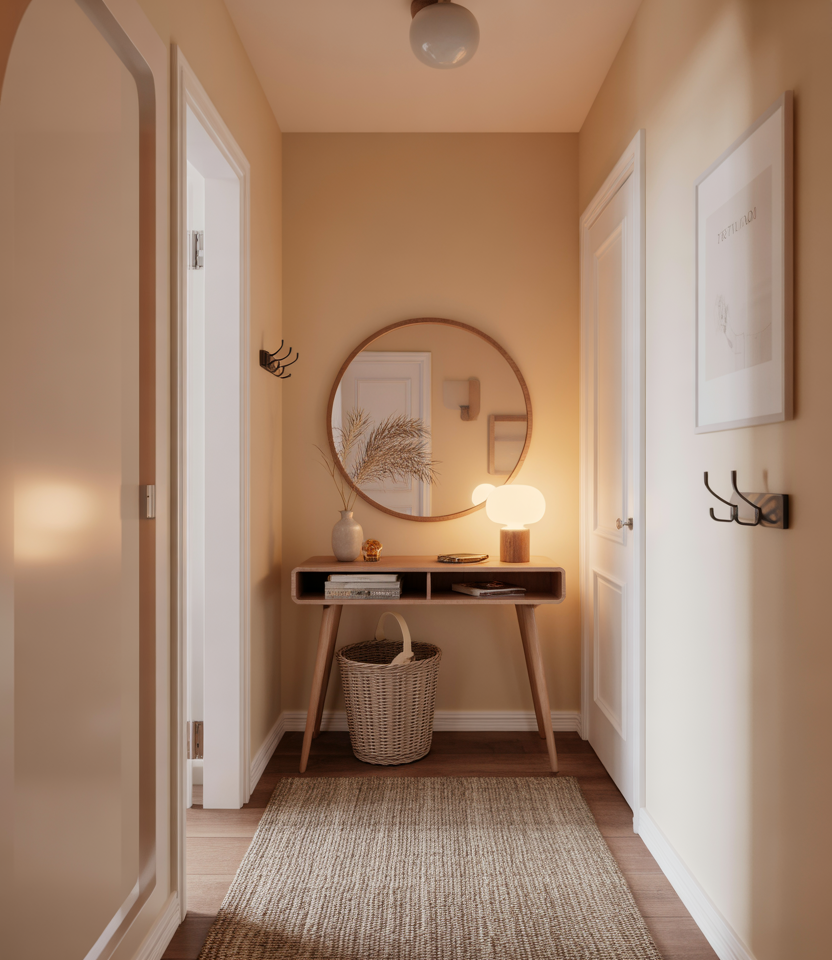 When your hallway is narrow, the first impression of your home depends on every inch. Think of the entrance as a soft landing spot: a slim console, rounded mirror, and one sculptural lamp can turn a tight pass-through into a calm pause. Choose pale paint, woven textures, and a few hooks instead of bulky storage so the space feels edited rather than crowded.
For practical impact, think in vertical layers: eye level for art and mirrors, mid-level for floating shelves, and low level for baskets or a runner. This keeps floors clearer and circulation smooth, especially in homes where deliveries, backpacks, or dog leashes tend to pile up. Start with one or two small additions, live with them for a week, and then add the next layer so the space evolves thoughtfully instead of all at once.
2 Calm Color Stories in a Long Hall
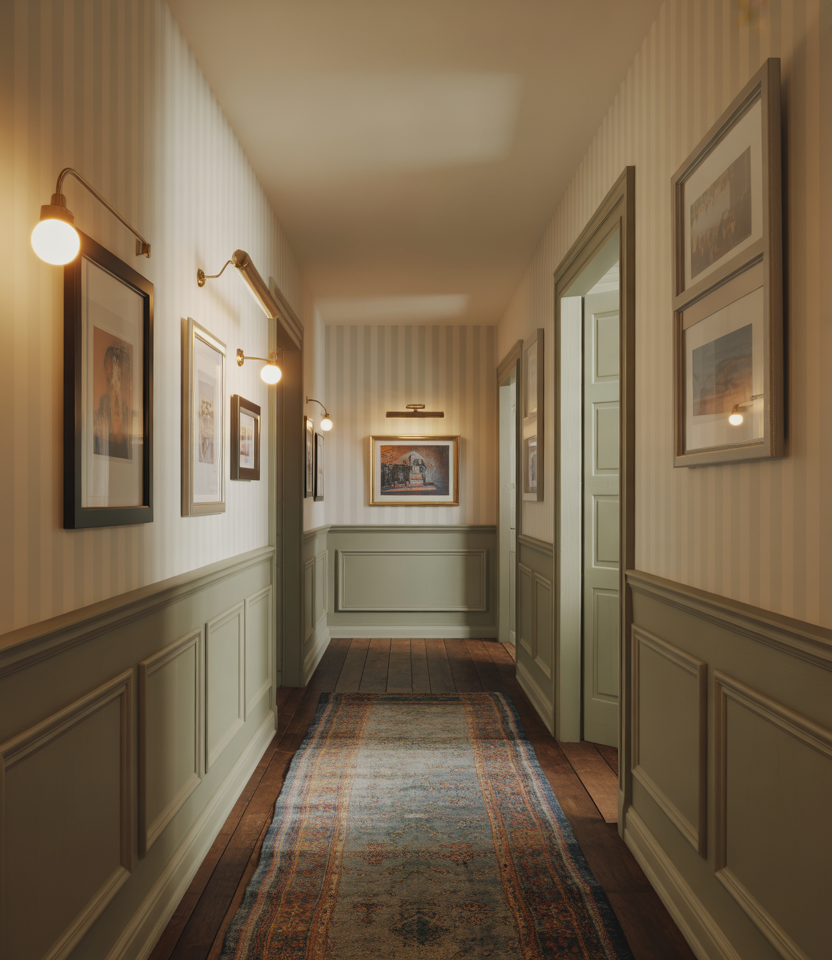 A long hallway can either feel like a tunnel or a gallery, and the difference often comes down to wallpaper and carefully chosen colors. Instead of leaving it stark white, consider a soft mural paper, tone-on-tone stripes, or a painted wainscot that visually shortens the run. Break up the length with lighting: wall sconces, picture lights, or small ceiling pendants staged along the way.
In American homes, these “runway” hallways often connect bedrooms, kids’ rooms, and baths. Treat them as shared family territory rather than no-man’s-land. A curated gallery of vacation photos, kids’ art in matching frames, or regional landscapes can give the corridor a sense of place. Swapping prints seasonally becomes an easy ritual that keeps the hallway fresh without repainting or re-papering everything.
3 Long Narrow Hallways with Sculptural Stairs
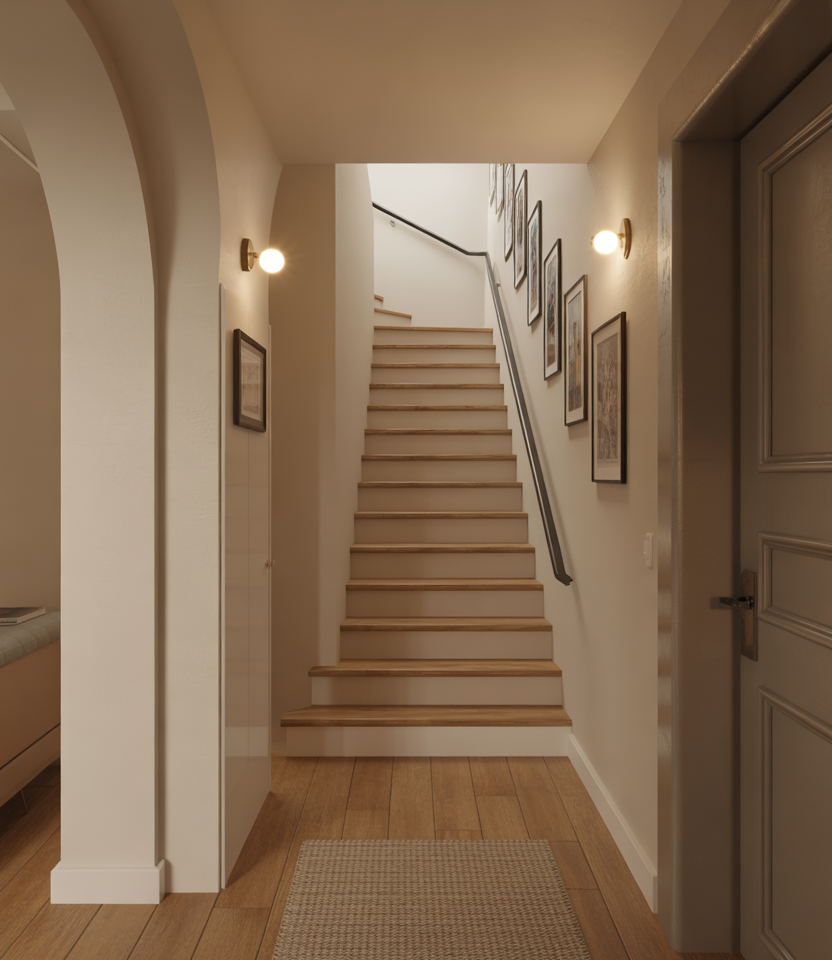 When a long, narrow hallway meets a main stair, the transition can feel awkward or magical. Use the wall leading upstairs to create rhythm: staggered frames, a handrail in warm wood, and simple wall washers can turn the climb into an architectural moment. Keep the palette tight so the eye flows naturally from corridor to stair without visual clutter at the turn.
A quick micro anecdote: one Brooklyn family swapped a dark stair runner for a striped cotton one and added three small sconces up the wall; suddenly, the kids wanted to sit on the steps to read. That’s the power of small hallway moves. Think about how people naturally pause—on the landing, mid-stair, at a window—and highlight those spots with softer light or a tiny shelf for a plant or candle.
4 Christmas Magic Winter Wonderland Hallway
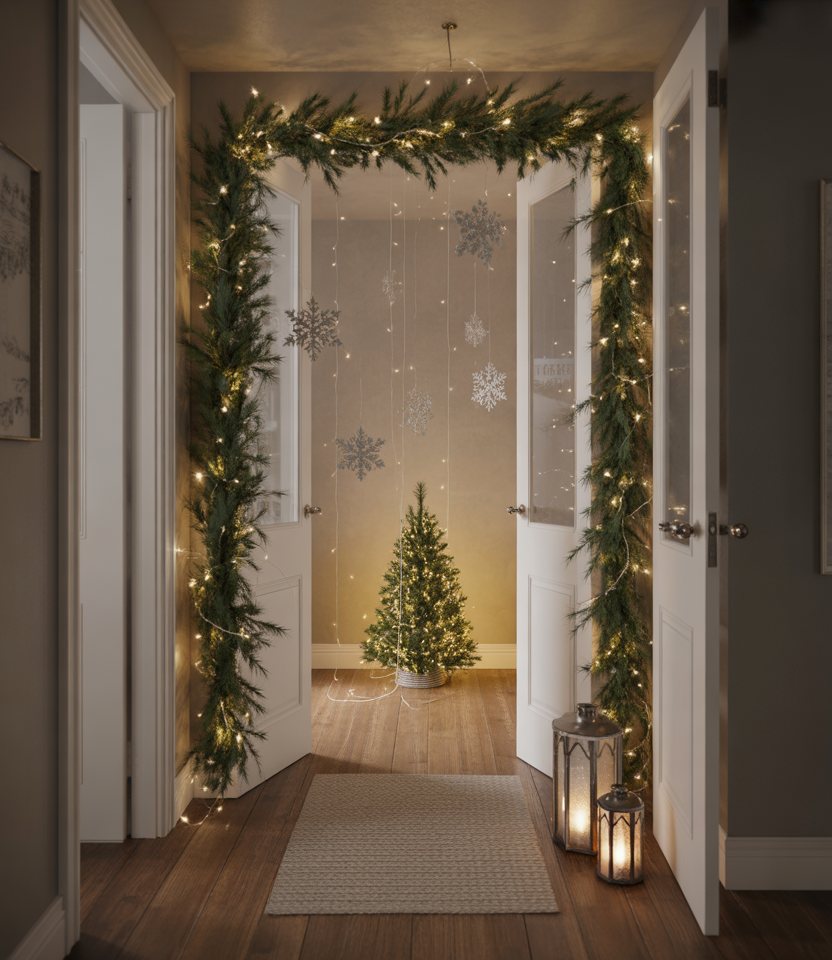 During Christmas, a hallway can quietly become a winter wonderland, especially if you treat it like a narrow seasonal stage set. Wrap a simple garland around doorframes, layer in paper snowflakes, and let a scented candle near a mirror reflect soft light. At the end of the hall, a small faux tree or cluster of lanterns gives guests a reason to look and move forward, not just pass through.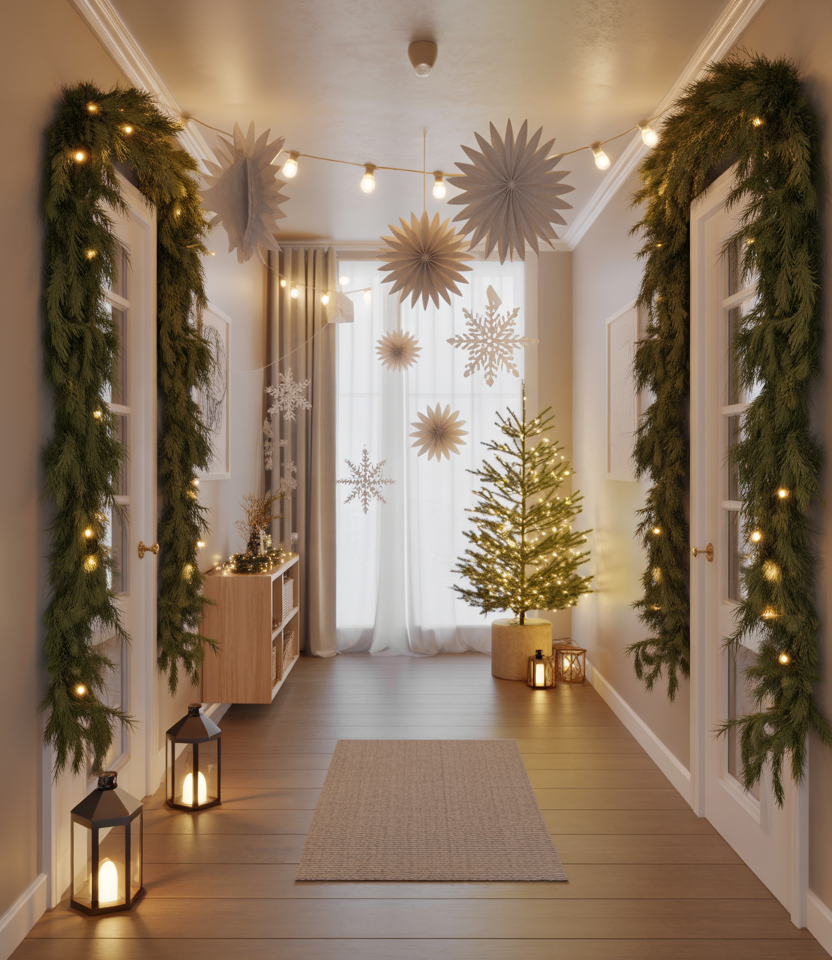
These seasonal setups work best in hallways that aren’t the primary obstacle course for everyday traffic. If your corridor is constantly full of shoes and sports gear, keep decor streamlined: wall-mounted wreaths instead of floor lanterns, garland secured high, and shatterproof ornaments. In apartments or smaller homes, one concentrated “moment” at the end of the hallway can feel just as magical as decking every inch.
5 Playful Halloween Whimsy with Gingerbread Vibes
For Halloween, some families are leaning into whimsical, storybook hallways inspired by Whoville and candy-coated houses, with just a hint of gingerbread charm. Think curved paper cutouts around door frames, pastel pumpkins instead of stark orange, and quirky striped runners. The goal is a hallway that feels playful and a little surreal, not genuinely spooky—especially if small kids will walk it after dark.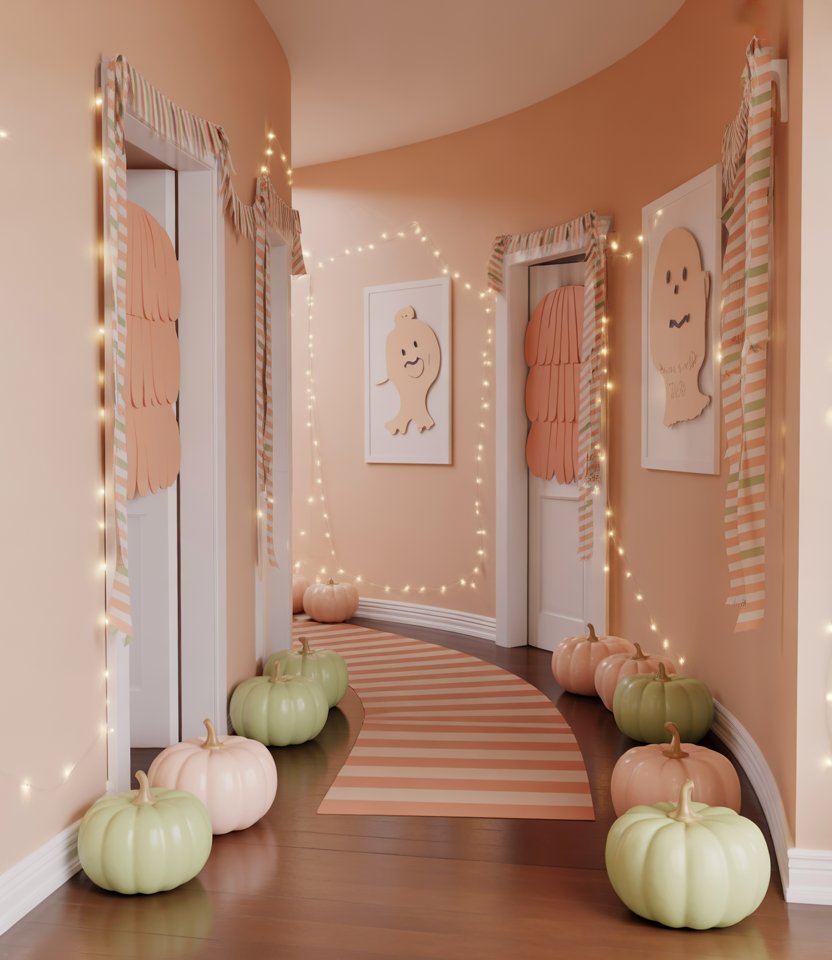
Designers note that this softer seasonal look layers easily with year-round decor. If your base hallway is neutral—light walls, warm wood floors—it takes only a few temporary pieces to shift the mood. The expert tip is to swap textiles first: a new runner, a novelty pillow on a hallway bench, or patterned ribbon on existing wreaths can carry a theme without a bin of plastic props that you’ll struggle to store later.
6 Cheerful School-Inspired Classroom Hallways
In homes with kids, a hallway can nod to school without feeling like a literal classroom. Think cork strips for art, simple cubbies, and a few chalk-style labels that help everyone get out the door. To school on time. A bright runner, an oversized clock, and fun wall colors turn a once-ignored corridor into a launch pad for the day instead of a stressful bottleneck.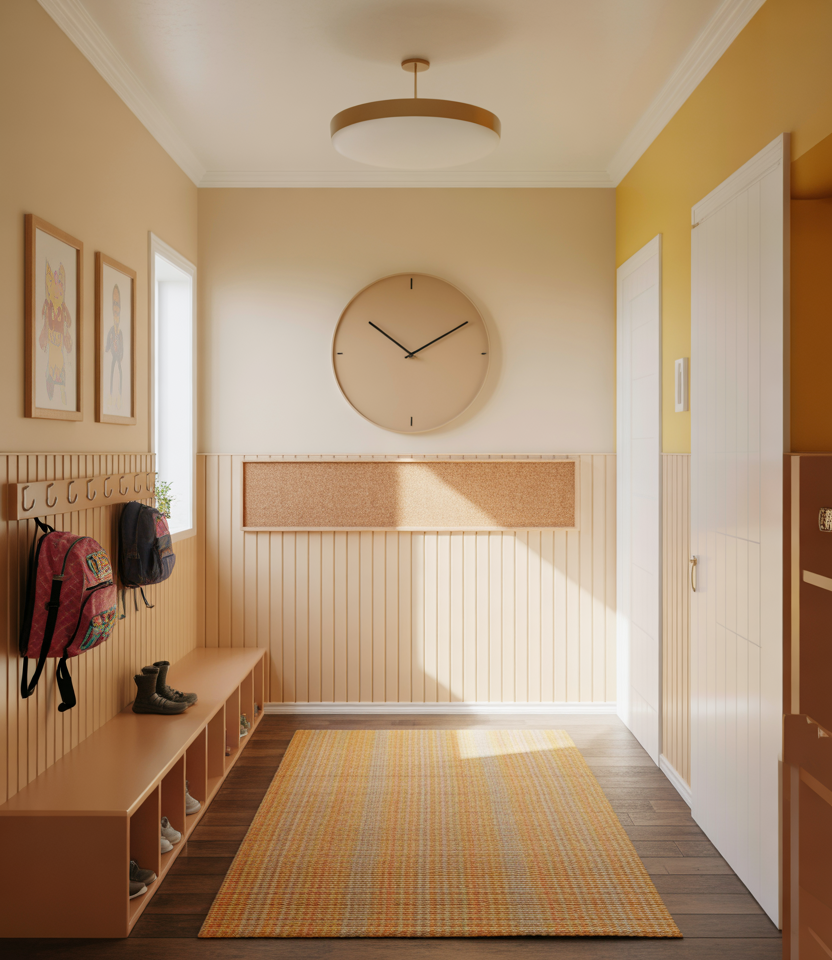
From a budget angle, this is one of the most affordable hallway transformations. Paint, hooks, and a simple bench do most of the heavy lifting, especially in suburban homes where there’s no dedicated mudroom. Repurpose old kitchen cabinets as cubbies, add stick-on labels, and buy a durable indoor-outdoor runner that can handle muddy sneakers. The result is a space that serves function first but still looks Pinterest-worthy.
7 Festive Christmas School Dorm Entry Hall
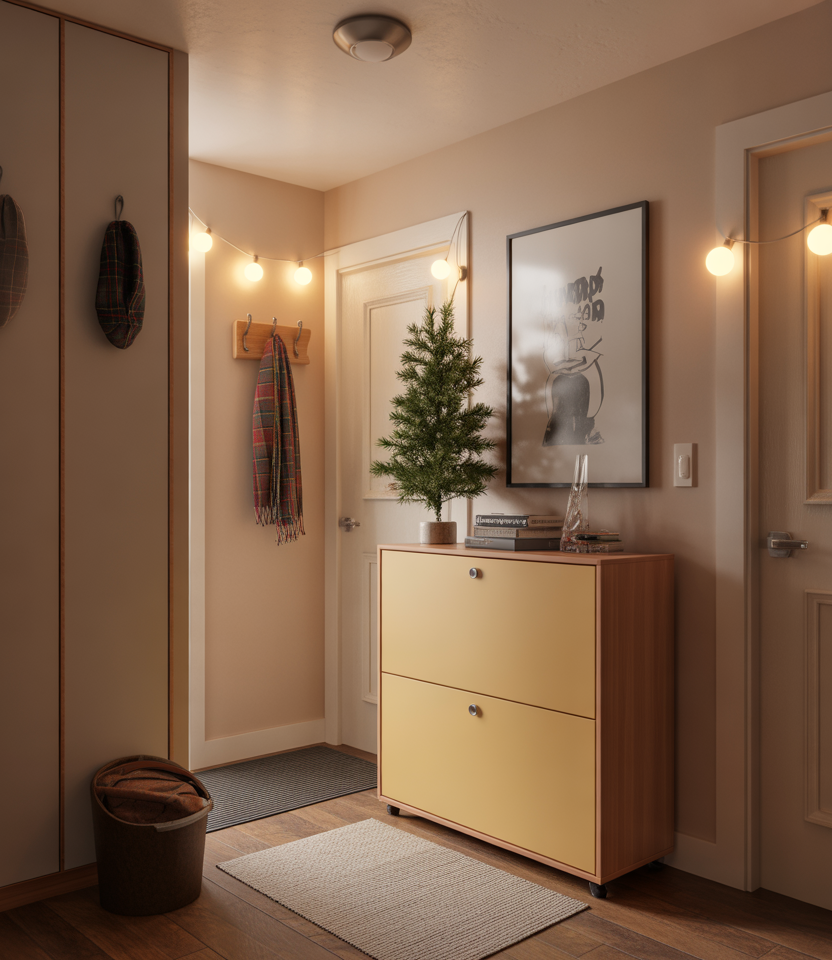 If you live with roommates or in a college dorm, the hall near your entry can channel cozy Christmas school vibes without feeling like a high school hallway. Think plaid scarves hung as decor, a mini tree on a shoe cabinet, and string lights framing the doorway. A neutral base with a few pops of red or green keeps it grown-up but still nostalgic, perfect for shared spaces.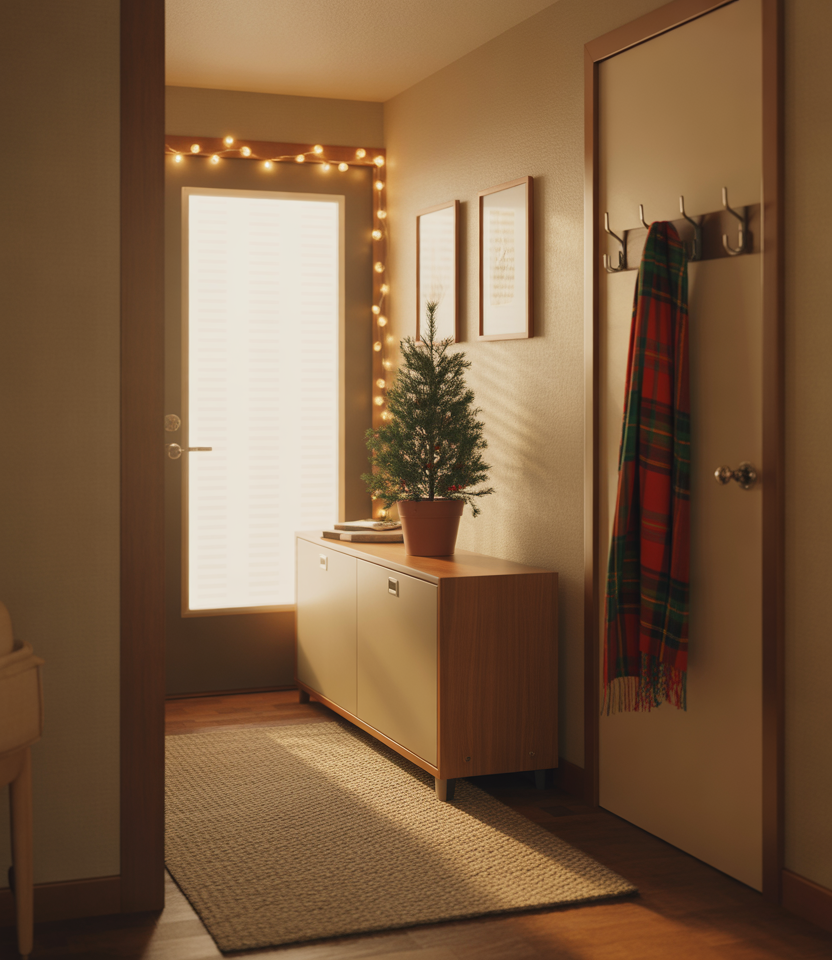
Real roommates rarely agree on every decorating decision, so focus on a few crowd-pleasing elements: soft lighting, a good doormat, and one shared message board or pinboard. Many American students use Command hooks and peel-and-stick decor to respect dorm rules and security deposits. A small communal ritual—like hanging a new ornament on the hall tree each winter—can make the space feel like everyone’s territory, not just the neatest roommate’s.
8 Breezy Hallway with a View of the Sea
Even if you’re nowhere near the sea, a breezy coastal hallway can make your place feel more expansive. In a large corridor, keep furniture sparse and let one or two big art pieces carry the story. A striped runner, sandy neutrals, and pale blue accents echo the shoreline. A cluster of simple hooks and a bench can still handle everyday life without breaking the calm mood in this not-too-short space.
The most common hallway mistake in coastal-inspired homes is over-theming: shells on every surface, anchors on every hook. Instead, limit literal motifs and lean on texture—linen, seagrass, unfinished wood—and a few carefully chosen prints. If you already have a lot happening in nearby rooms, let the hallway be simpler. This negative space gives the eye a place to rest and actually makes your favorite decor moments in adjoining rooms feel more special.
9 Bright Entry Hallways With Soft Color Transitions
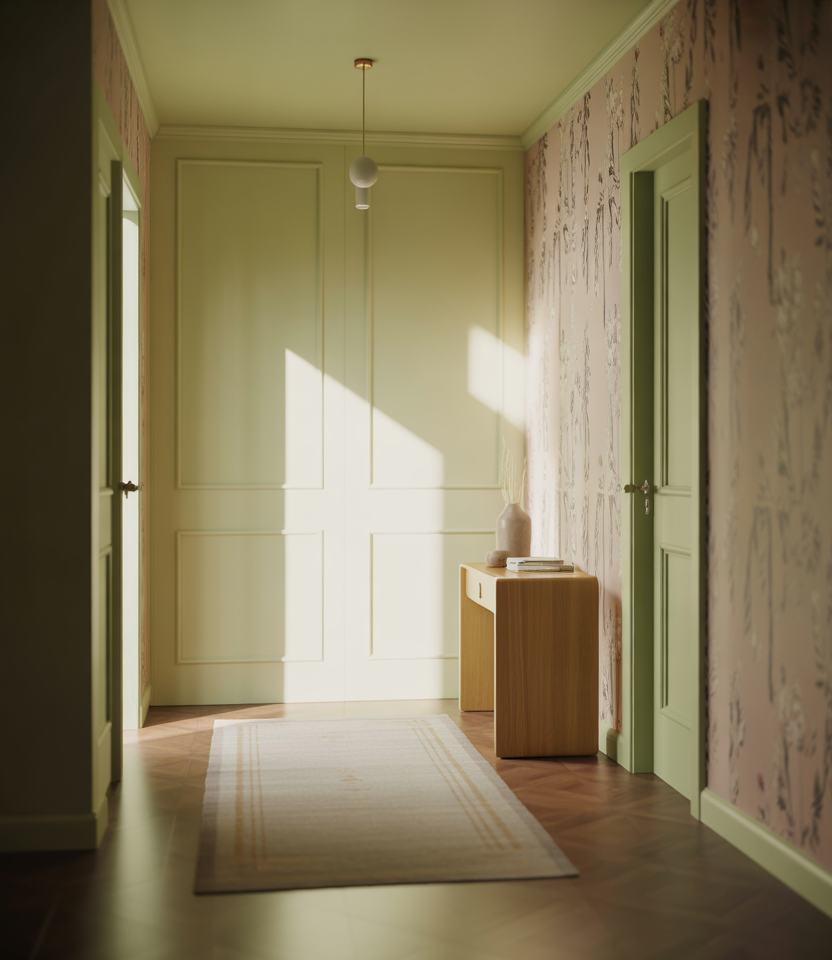 Using gentle colors as the foundation, even a compact entry can flow naturally into the rest of the home. A subtle wallpaper pattern, pastel accents, and a light runner help create smooth visual movement. This approach works especially well in homes where the hallway serves as the first connection between key rooms.
Where it works best: this style shines in smaller homes, townhouses, or apartments where spaces blend quickly from one to another. Soft color transitions make the hallway feel more open and unified without requiring major renovations or heavy décor layers.
10 Storybook Gingerbread House Hallway
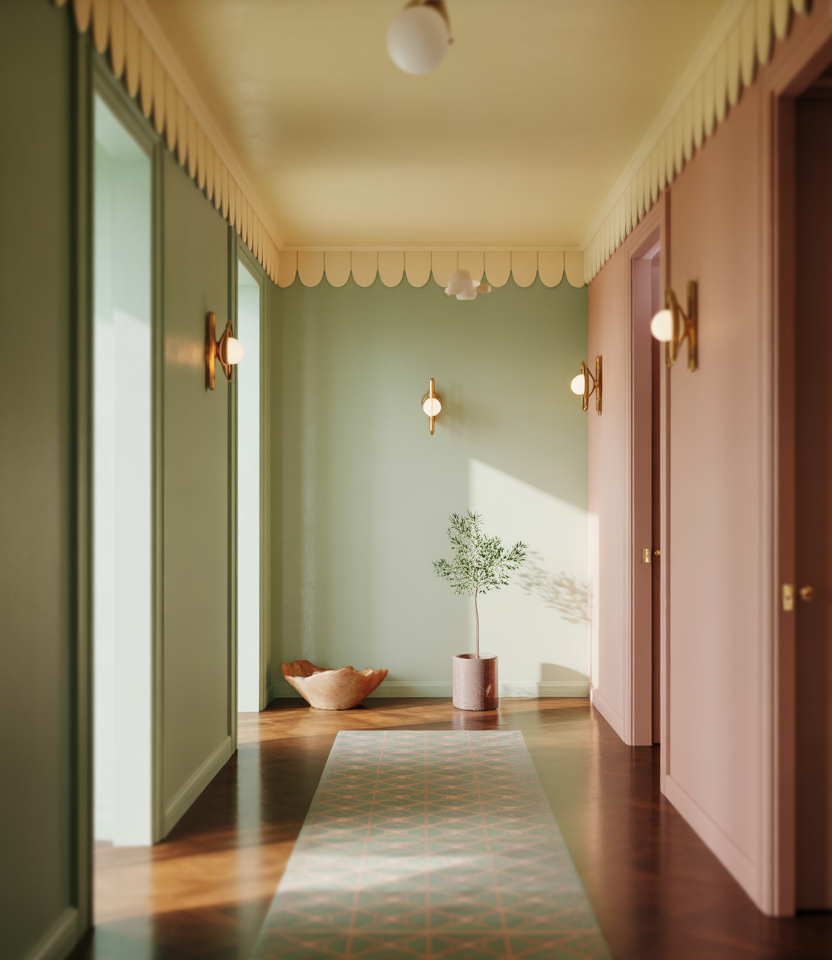 Hallways deserve to have fun; that’s when you go all fantasy with a gingerbread house color palette. Picturesque color palettes, candy-inspired colors, and grown-up cozy pattern decor all work just fine. In an inner-city apartment with a narrow hallway, a single accent wall and a festively colored runner create a whole storybook. Gentle lighting for a soft nighttime glow on the way back from the kitchen or a school pickup is a perfect finishing touch.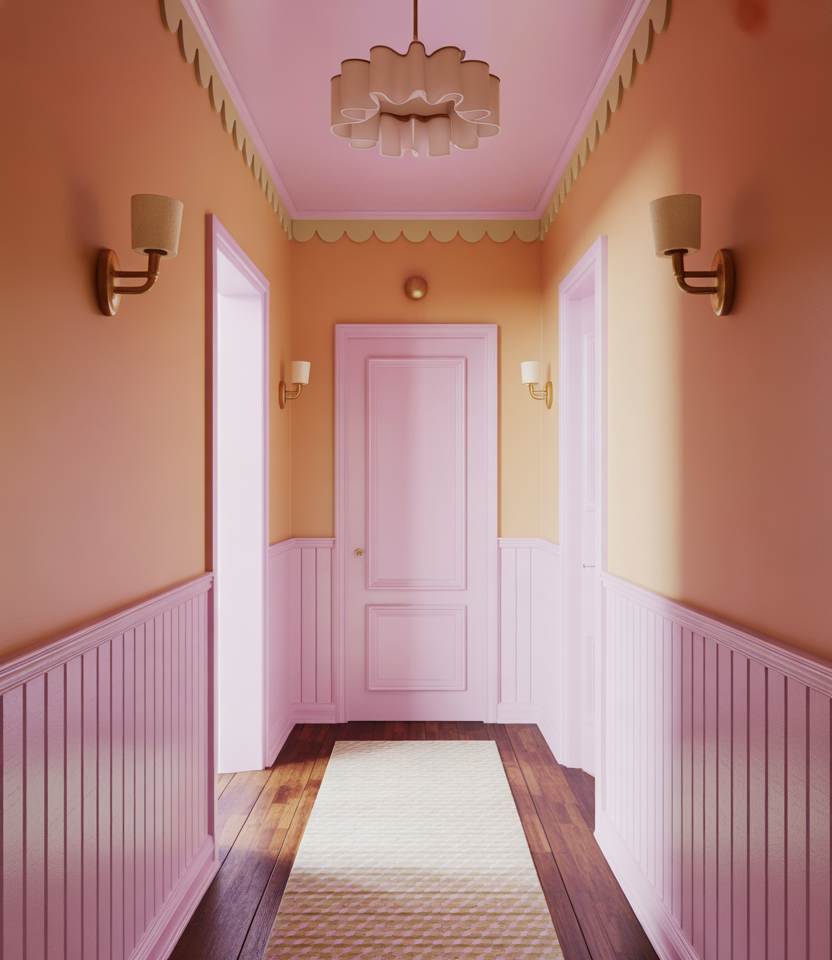
The real challenge is including details that make a home beloved yet also building in details that make a home a place for longevity. One strategy is to incorporate whimsy at eye level and below while keeping interior doors, built-ins, and ceilings classic. When tastes shift to minimalism, homeowners end up swapping art and rugs instead of painting millwork. This garnered a lot of long-term satisfaction. This is also what homeowners have shared as “reversible whimsy.”
11 Minimalist Short Entry With Warm Lighting
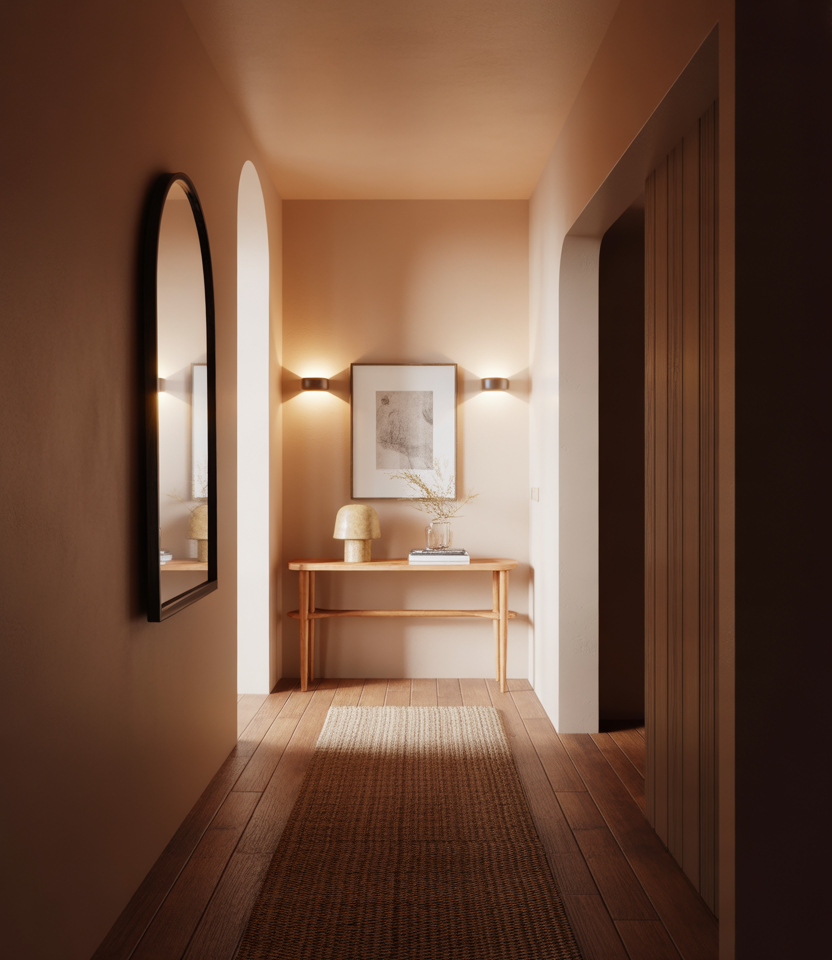 A short hallway can feel intentional when you treat it like a small gallery rather than leftover space. Keep the entrance calm with a single artwork, soft sconces, and a natural runner. Even minimal decor feels elevated when the palette is tight and materials are warm. This approach works especially well in homes where visual noise easily builds.
For practical insight, use lighting as your main design tool. Soft sconces or a diffused ceiling light make small hallways feel intentional rather than cramped. When space is tight, avoid floor items entirely and rely on wall-mounted solutions that preserve every step of walking clearance.
12 Dorm-Friendly Long Hallway Refreshes
Lots of newly built dorms have shared long hallways that feel very boring. This can be fixed by adding some peel-and-stick wall panels, a rug, and some wallpaper. A warm-tone LED bulb replacement and lightweight entry bench will help make the space feel used and lived in.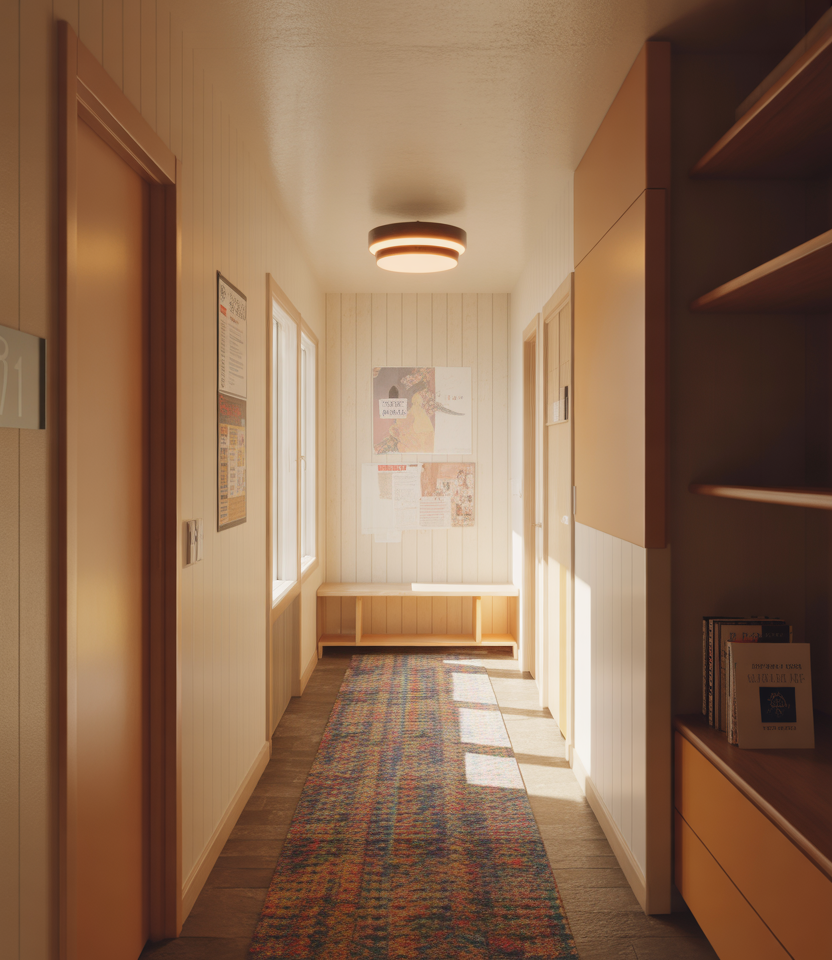
In the U.S.A., hallways are often decorated seasonally by students. Many will use a shared whiteboard for notes with some themed decorations, and a small rotating gallery wall can help organize a busy space or simply make it feel more welcoming. It also encourages more organized traffic.
13 Soft Neutrals for an Upstairs Connection Hall
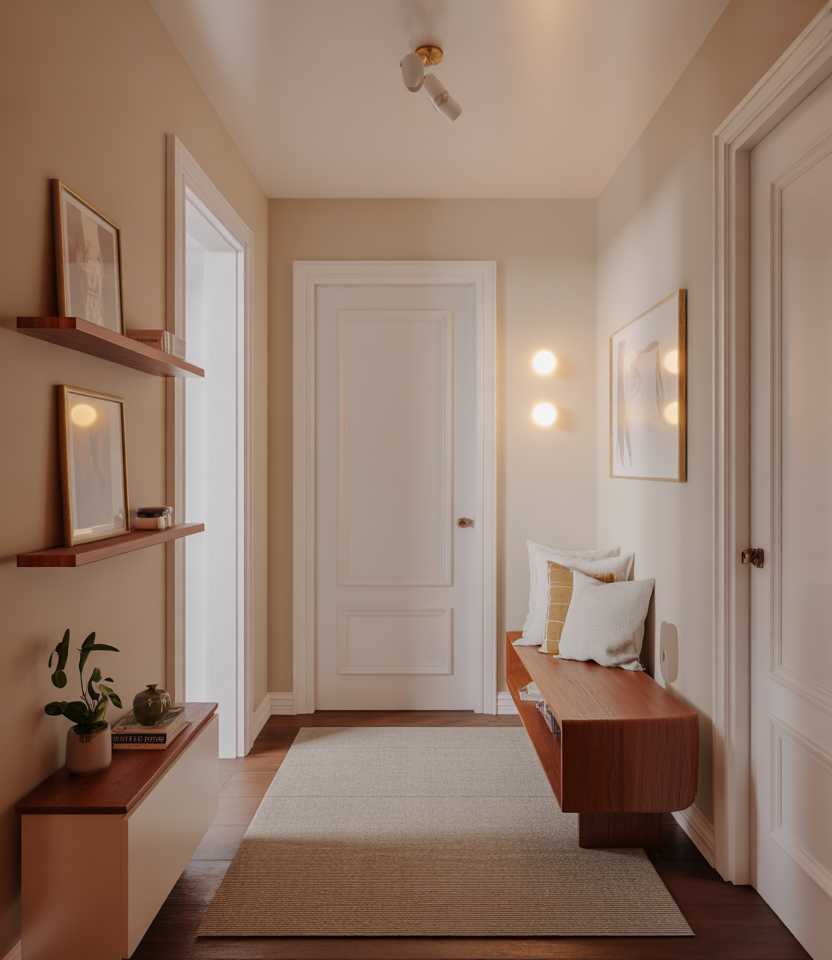 An upstairs hallway that links bedrooms and a main stair often benefits from soft neutrals and layered texture. Use subtle colors, a quiet runner, and slim art ledges to make the upstairs transition smoother. A monochrome palette also keeps family spaces cohesive, especially where multiple doorways crowd the sightline.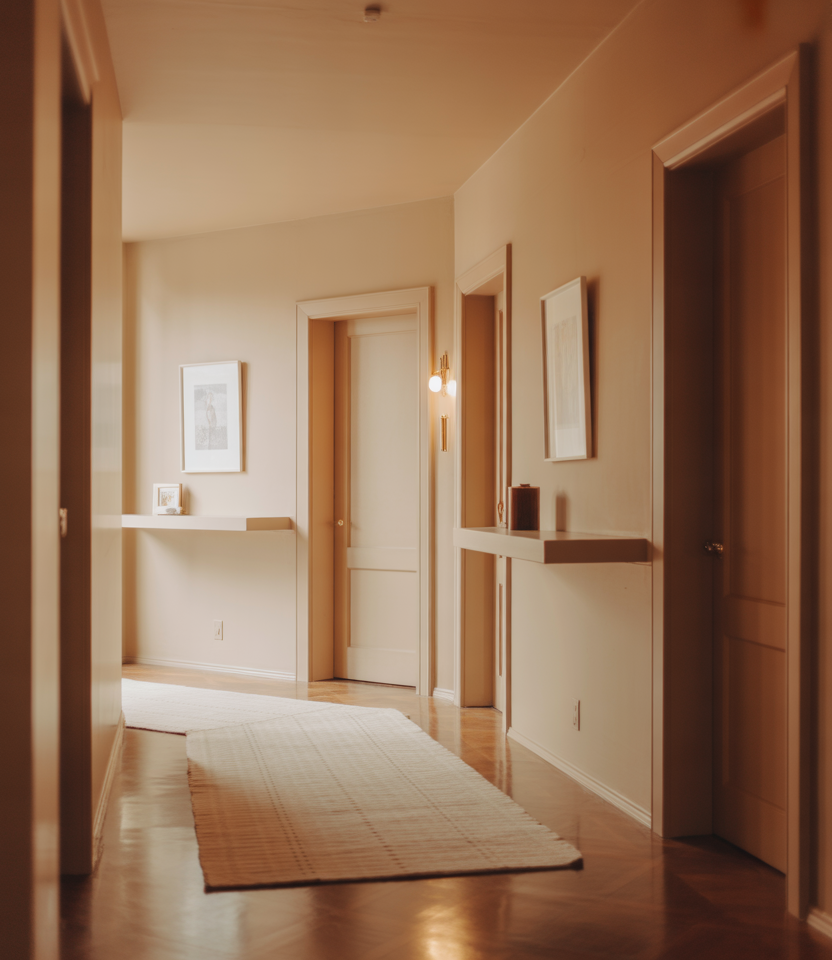
Micro anecdote: a Denver couple replaced mismatched frames with a simple ledge and soft-toned prints; suddenly their upstairs dash to get ready for work felt calmer. Sometimes it’s not the hallway size that stresses you—it’s visual clutter. Small swaps change mood more than square footage ever could.
14 Gingerbread Trim in a Home Entry Nook
Inspired by playful gingerbread motifs, a tiny home entry can feature scalloped trims, warm woods, and candy-soft colors without becoming overly whimsical. Add a curved shelf or rounded hooks to soften the geometry of a tight space. This look thrives in cozy houses and older buildings where charm already runs through the architecture.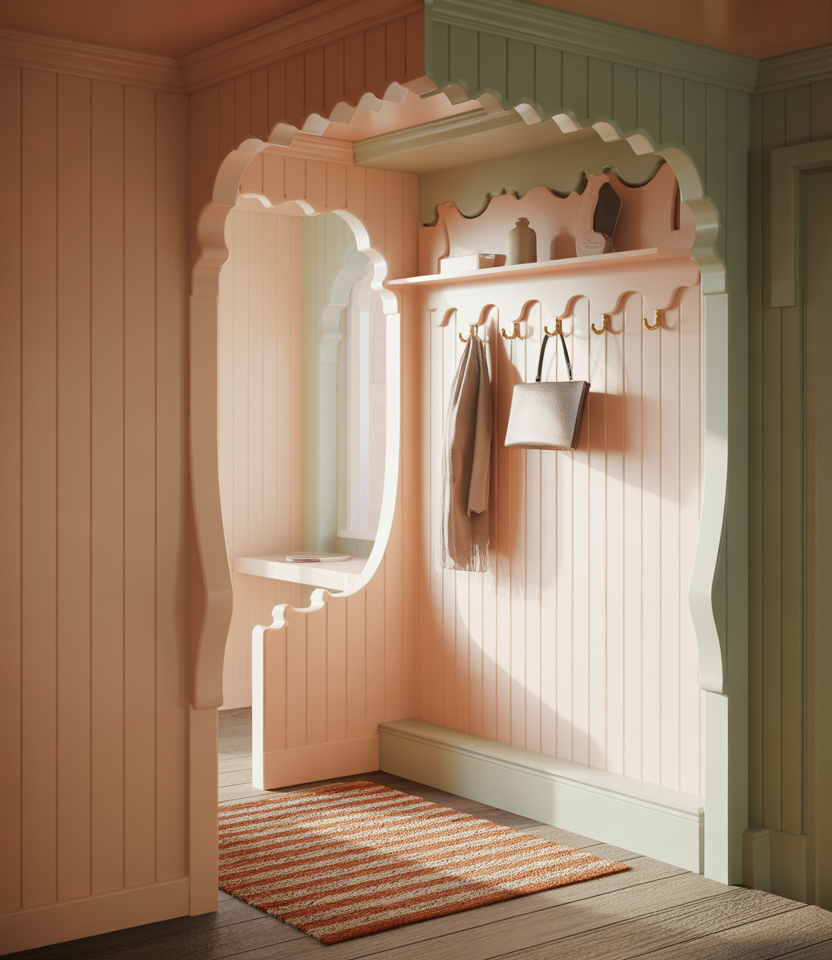
Where it works best: older urban apartments, craftsman homes, or any entry with natural character. Since gingerbread detailing already leans decorative, pairing it with muted color palettes keeps the effect stylish rather than theme-park bright.
15 Winter Hallway With Layered Textures
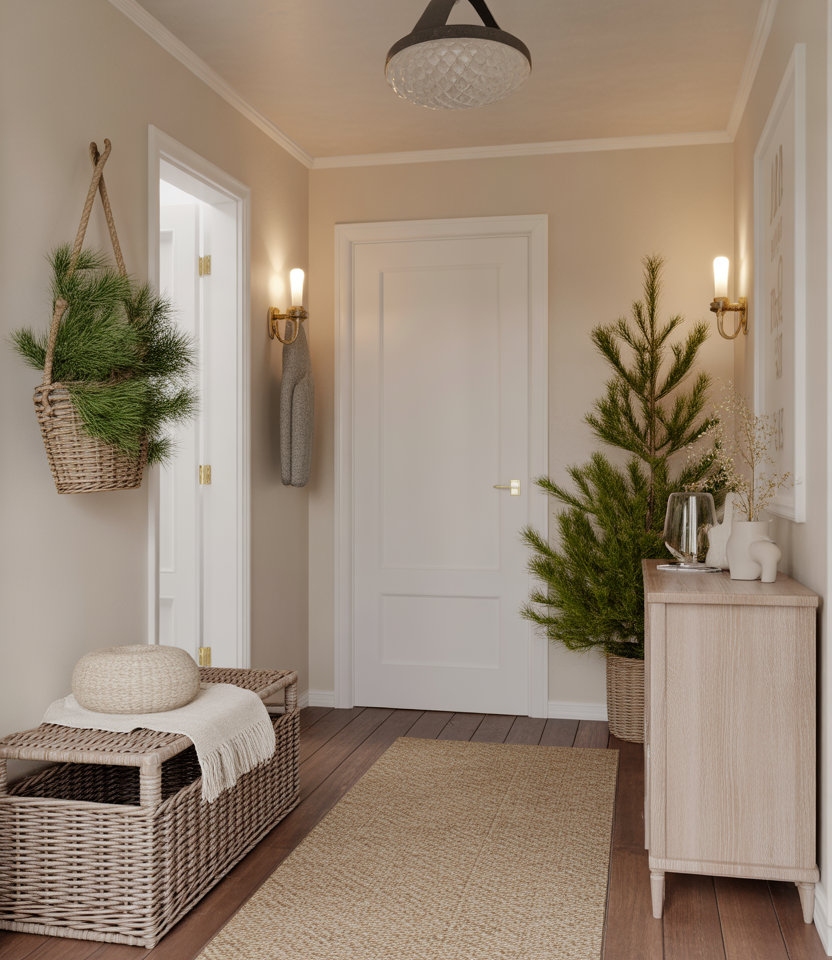 For colder climates, a hallway dressed in woven baskets, soft lighting, and gentle winter wonderland tones can feel grounding. Add a textured runner, subtle snow-white accents, and hints of Christmas greenery. This style keeps the corridor warm without overwhelming it. Homes with a narrow layout especially benefit from cozy but restrained layers.
Expert-style commentary: winter hallways succeed when they rely on texture more than objects. Designers often build atmosphere through rugs, warm lighting, and subtle greens rather than cluttered holiday props that break circulation or dominate sightlines.
16 Sea-Inspired Narrow Coastal Passage
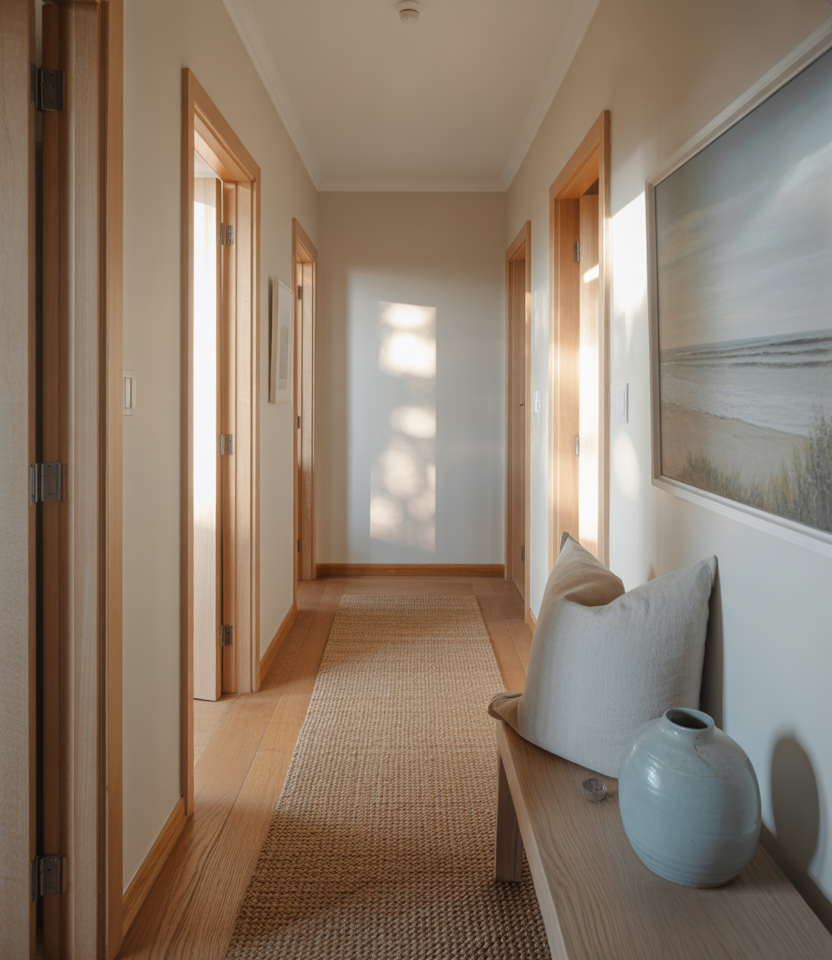 A narrow hallway can also reflect the sea’s tranquility with soft shades of blue, warm sand colors, and a light rug. To avoid visual noise, choose one large piece of artwork, as mini frames can be distracting. A soft and open feel can be achieved with the addition of a coastal scene or abstract wave to create balance and emotional temperature.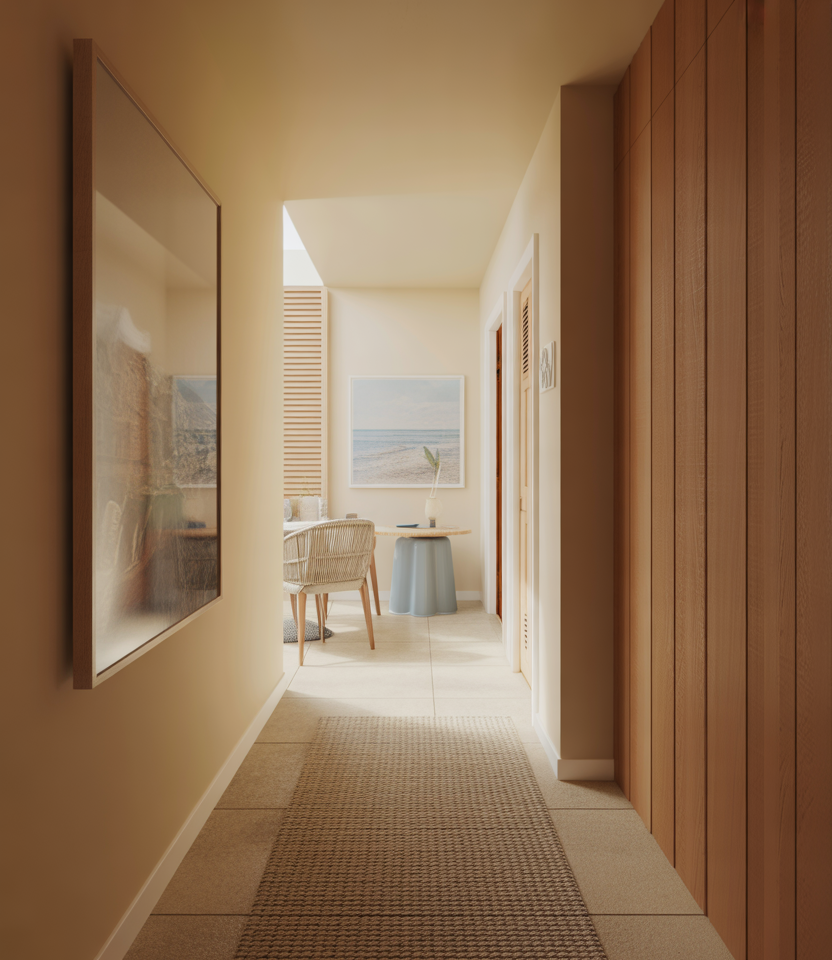
Coastal hallways also work budget-friendly. Major change can be achieved with just a large print, a runner, and soft blue accents. More of the change happens with hand-painted walls and rugs than expensive furnishings, which hallways also don’t require.
17 Whoville-Lite Pastel Holiday Corridor
A playful holiday hallway with hints of Whoville charm uses curved lines, soft pastels, and a touch of Christmas whimsy. Lightweight garlands, rounded mirrors, and sweeping silhouettes bring the look together. In a family home, this style feels festive without the visual overload of bright primary colors.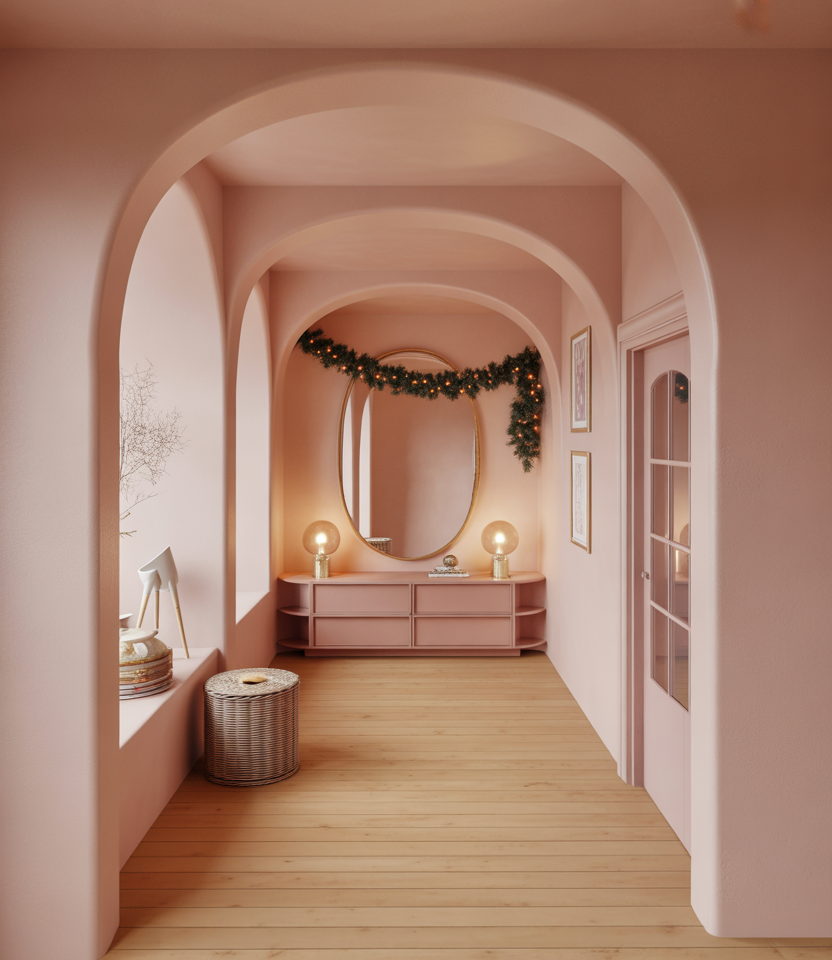
Real homeowner behavior shows that families gravitate toward softer palettes because they transition smoothly after the holiday season. Keeping décor easy to remove—like paper cut-outs, textiles, and garlands—helps avoid storage headaches once January arrives.
18 Minecraft Geometry in a Short Hallway
Even a short hallway can pick up gentle geometric cues from Minecraft without becoming overly themed. A pixel-style rug, squared shelving, and simple block-inspired colors introduce the idea. This design works well in shared family areas where both adults and kids pass through daily, allowing subtle character without clutter.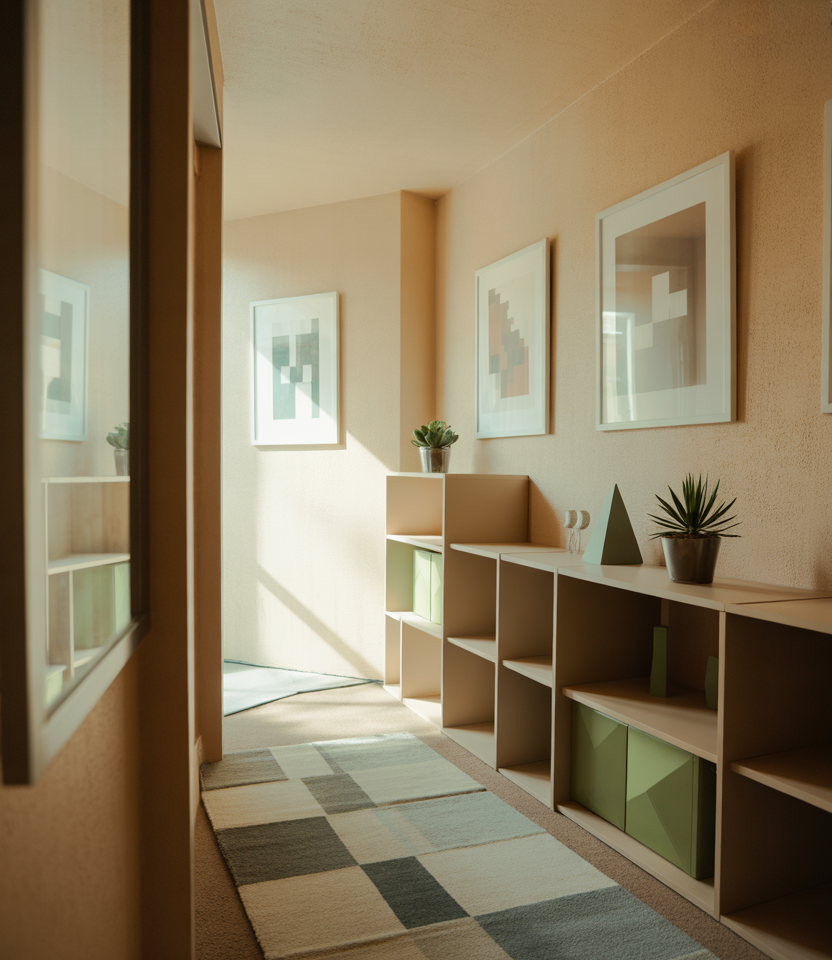
Common mistakes and how to avoid them: the biggest pitfall is over-theming. Skip literal decals or character prints and rely on geometry instead. Keep the palette calm so adults enjoy the hallway too. A few graphic elements do the job without overwhelming the architecture.
19 Large Entry Hall With Seasonal Classroom Energy
A large entry hall can subtly reflect classroom charm through cork boards, simple hooks, and a practical to-school launch zone. Soft colors and open space prevent the look from feeling cluttered. This works especially well for families with multiple kids who need predictable storage the moment they walk inside.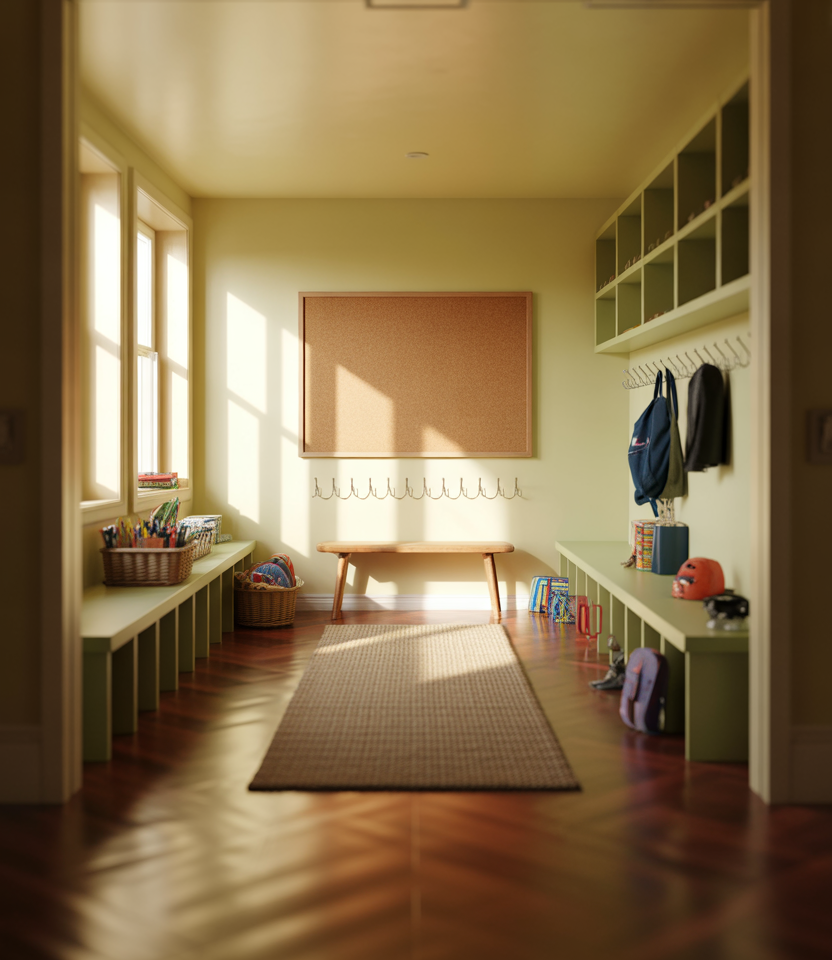
American lifestyle context: in many U.S. households, the entry hall doubles as a daily command center. Creating dedicated drop zones reduces morning chaos and helps kids maintain independence, especially during the busy school year.
20 Halloween Gingerbread House Hallway
A playful hybrid of Halloween and gingerbread house aesthetics brings warm whimsy to a family corridor. Think chocolate-toned walls, candy-shaped accents, and soft lighting. A light entrance rug and minimal décor keep the look charming rather than overwhelming, making it suitable even for smaller hallways.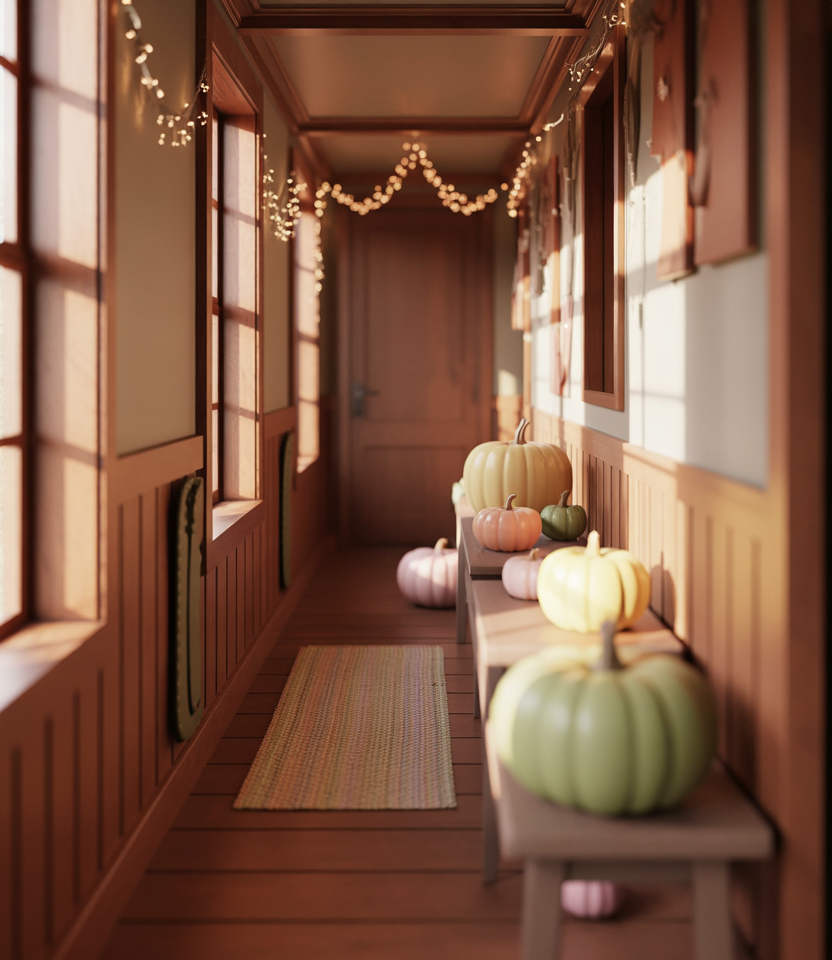
Where it works best: families who want seasonal décor without heavy scares or clutter. This blend feels gentle for young kids and is easy to dismantle after the holidays, making it practical for apartments and mid-size homes alike.
21 Warm Classroom-Inspired Reading Hall
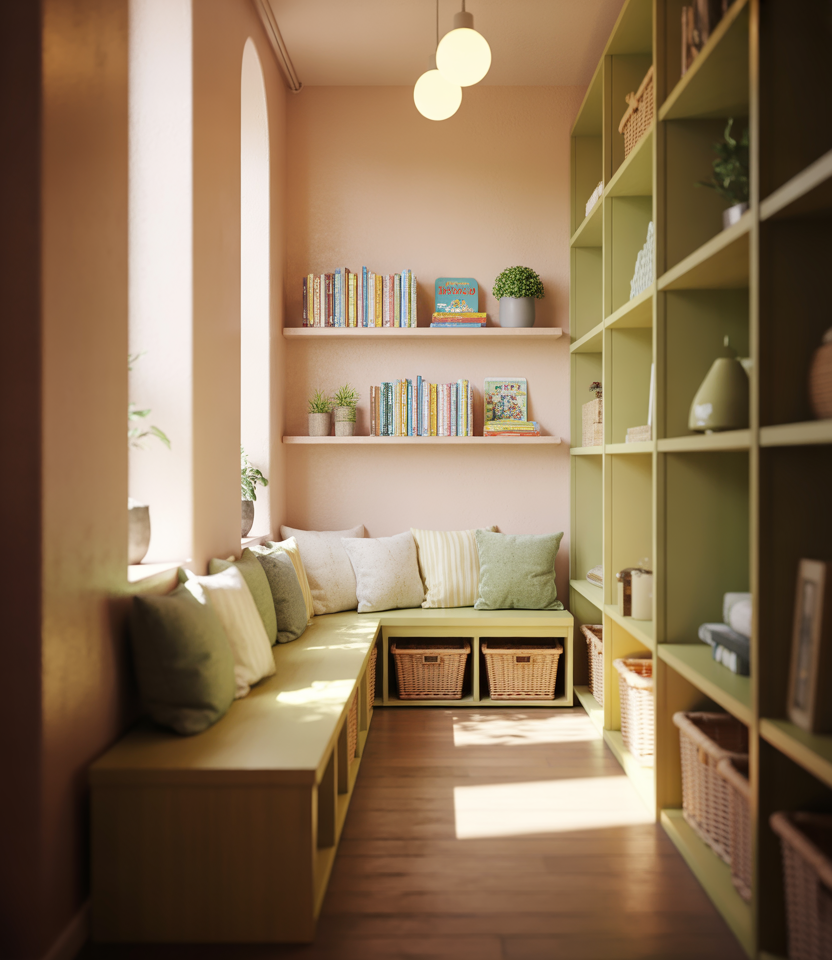 A hallway shaped like a cozy classroom nook can become a quiet escape instead of a pass-through. Add a slim bench, soft cushions, and warm colors. Even a short corridor can host a mini bookshelf or picture ledge that feels intentional. This works beautifully in homes where family members want a spot to pause rather than rush onward.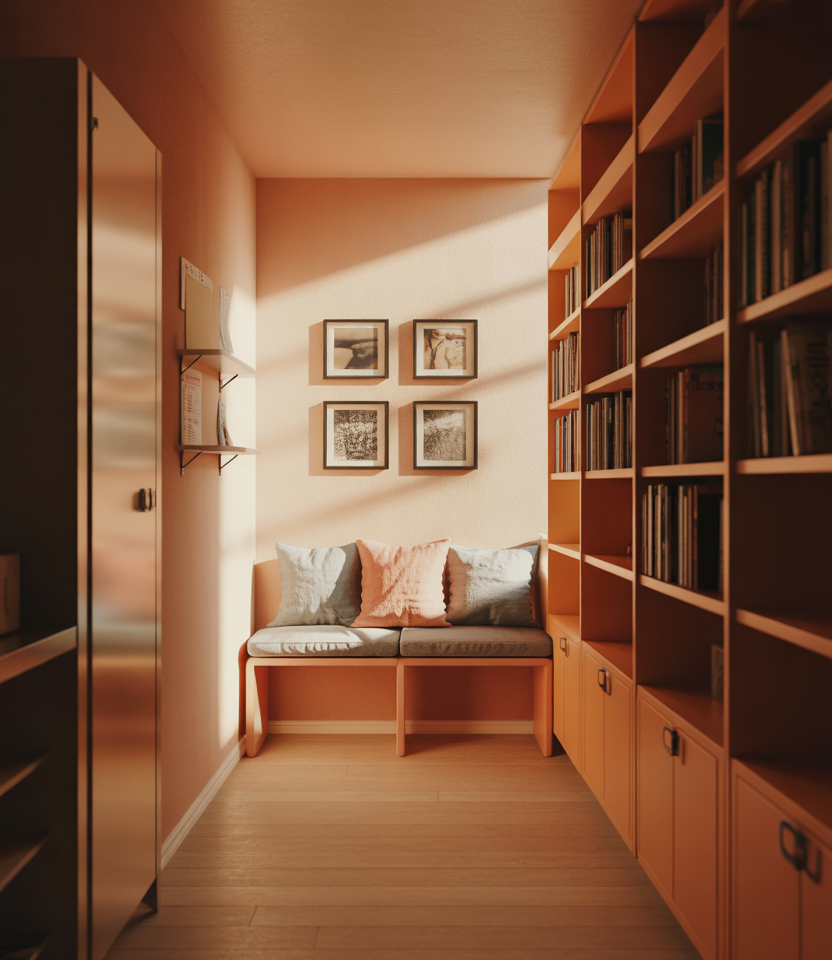
Practical insight: keep seating shallow—no deep benches that block circulation. Choose wall-mounted lighting or sconces to preserve floor space, and use narrow storage solutions so the hallway remains a comfortable walking path while still offering functionality.
22 Dorm Hallway With Soft Seasonal Touches
In a shared dorm space, a tidy hallway near the entry can carry subtle Christmas personality without overwhelming roommates. Add miniature greenery, a soft rug, and warm fairy lights that feel cozy rather than bright. Keep palettes soft and decorations easy to remove, maintaining harmony with everyone’s style preferences.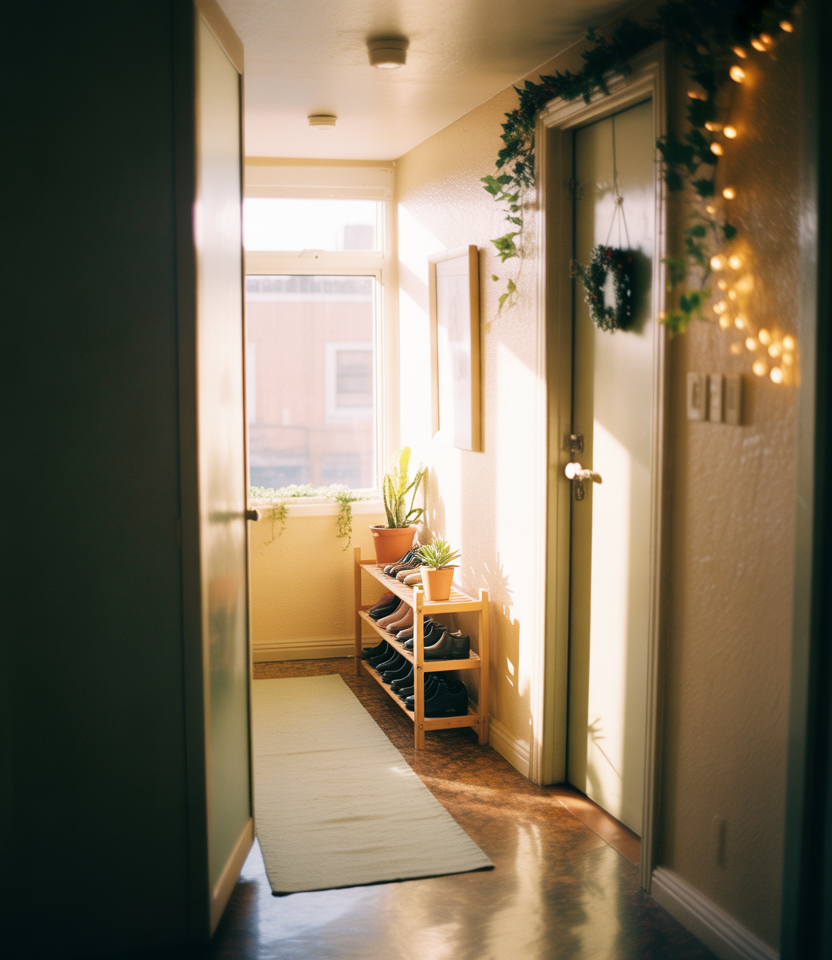
Real homeowner behavior (or student behavior): people tend to decorate only what they personally maintain. Shared hallways stay cleanest when each roommate chooses one area—light string, wreath, or rug—so upkeep doesn’t fall on one person. This keeps the space festive and fair.
23 Coastal Entrances With Gentle Marine Accents
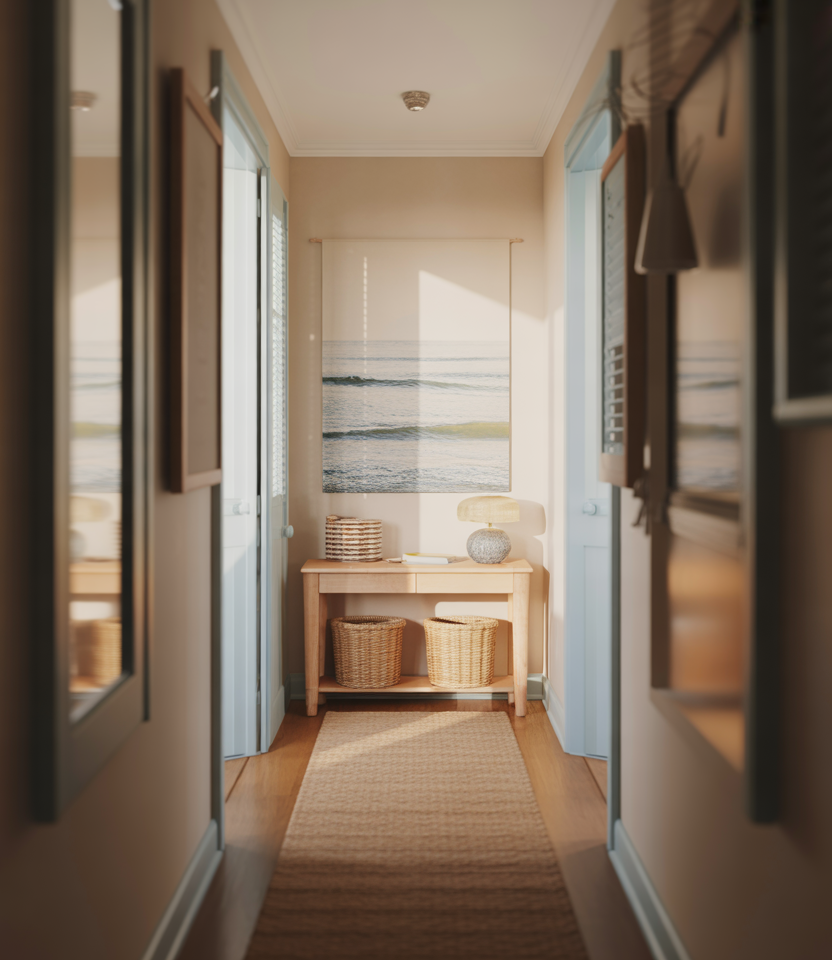 When a hallway channels the calm of the sea, even a narrow passage feels more open. Soft blues, sandy textures, and a crisp entrance runner create a breezy flow. A single large artwork or sculptural vase keeps the look focused. Subtle coastal details work beautifully in apartments and smaller homes where airy visual cues matter more than decorative quantity.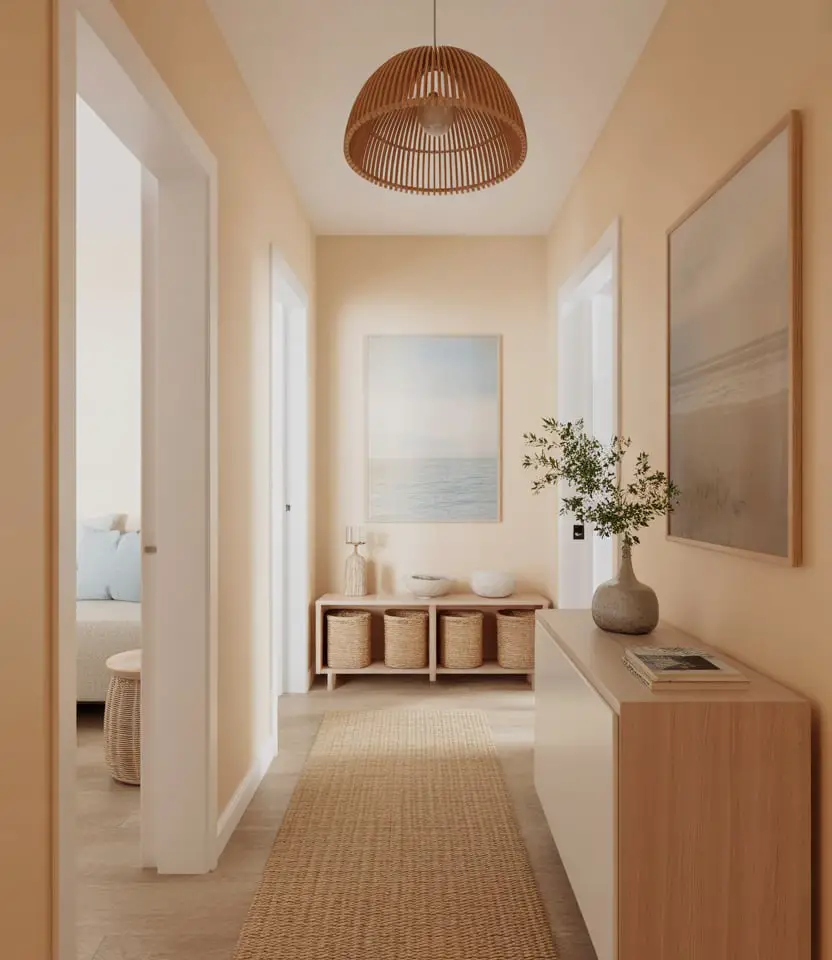
Expert-style commentary: successful coastal design avoids clichés. Designers focus on tone, scale, and material instead of literal motifs. One strong focal point—an artwork or sculptural object—anchors the space, while gentle color transitions prevent the hallway from feeling cluttered or thematically heavy.
Hallways might never be the biggest rooms in the house, but in 2026 they’re finally treated as spaces with real personality and purpose. Whether you lean festive, coastal, school-inspired, or quietly minimal, the right hallway decor can change how your whole home feels as you move through it. If one of these ideas sparks something, share how you’d adapt it in your own space—those details often help others see what’s possible in their own homes.